

In a world shaped by insecure work, rising living costs, automation, illness, unpaid care, and unequal access to opportunity, Universal Basic Income asks a direct question: what would change if everyone had a guaranteed income floor, without punitive conditions or the constant threat of losing it?
This project explores UBI as a proposal for security, dignity, and greater freedom to make choices. It examines the evidence from basic-income and cash-transfer experiments, many of which have found improvements in wellbeing, financial security, and mental health. Employment outcomes, however, are often small, mixed, or difficult to interpret, while the broader effects of a full and permanent UBI cannot be settled by short, limited trials alone.pmc.ncbi.nlm.nih+2
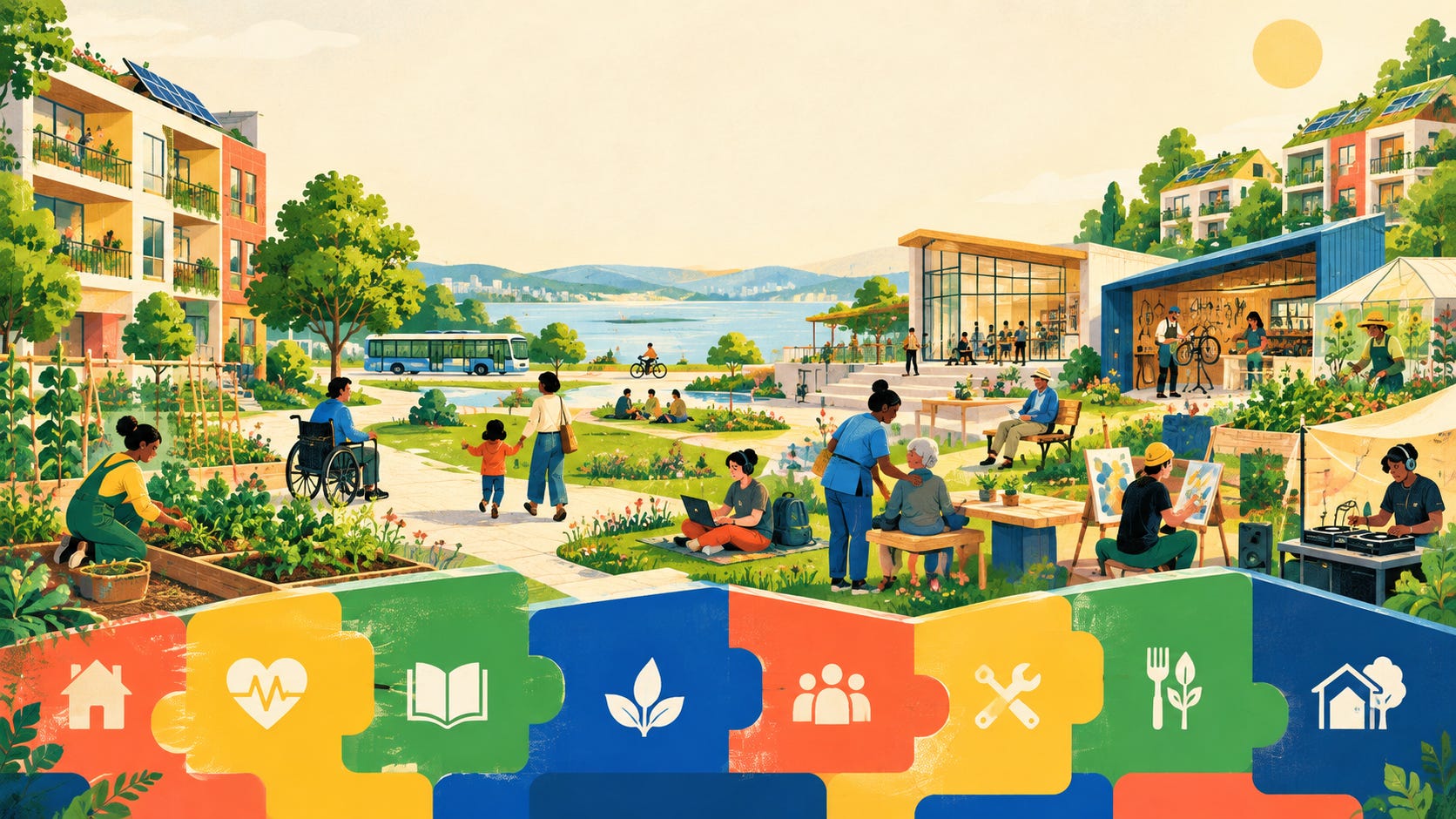
Rather than treating this uncertainty as an argument to stop thinking, Universal Basic Income asks what supporting structures would be needed for income security to reach its real potential: affordable housing, accessible healthcare, education, public transport, childcare, disability support, workers’ rights, and democratic control over essential services. Trials can show what happens when financial pressure eases for some people; wider social transformation requires the systems around them to become more supportive too. The Finnish experiment, for example, reported higher life satisfaction and less mental strain among recipients, while employment effects were modest.