

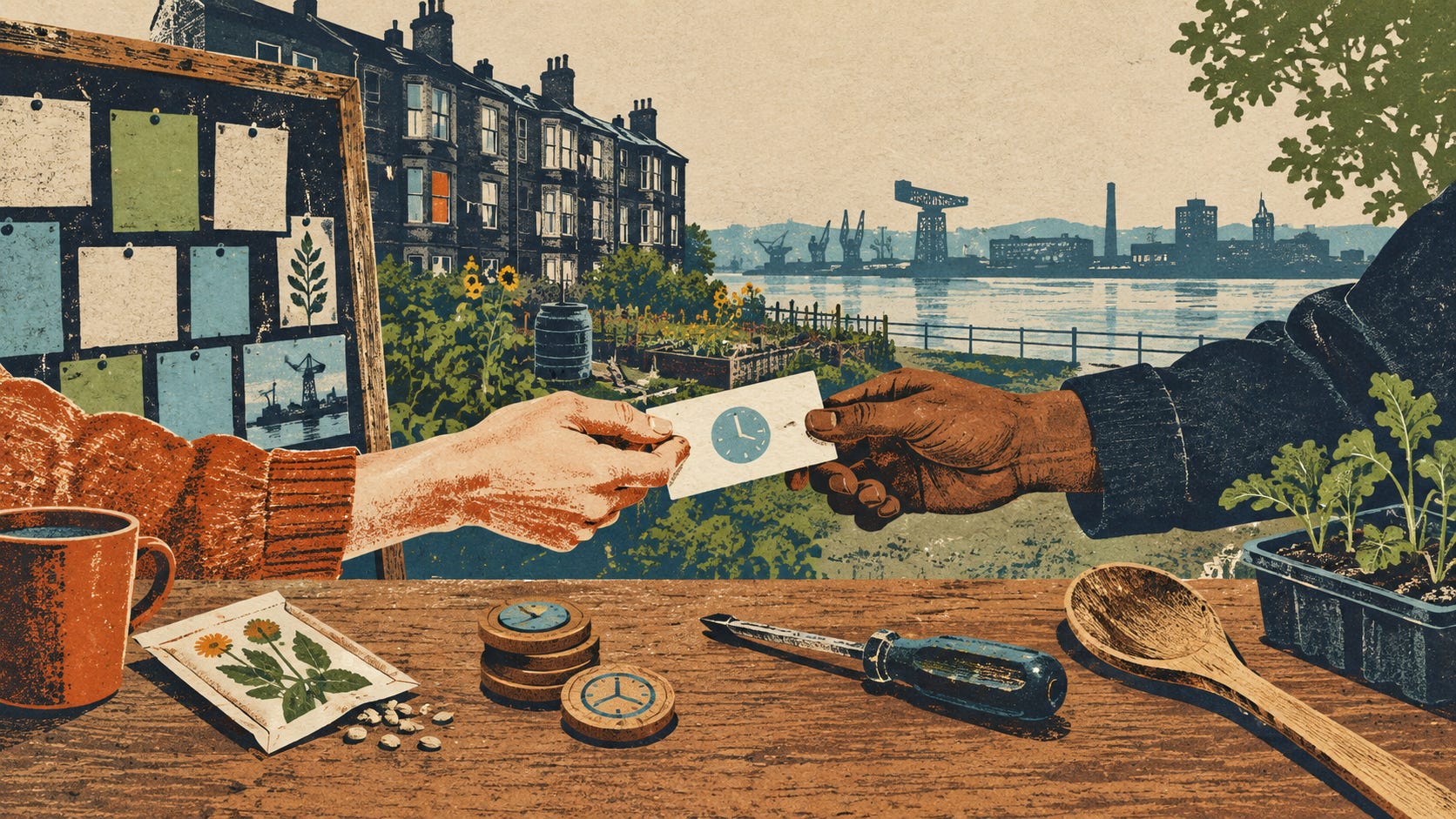
Time is one of the most valuable things people have, yet conventional economics often treats it as worthless unless it can be sold for wages. Time banking starts from a different idea: that an hour of care, repair, translation, cooking, gardening, listening, mentoring, or practical help has value, regardless of a person’s job title, income, age, health, or formal qualifications.
This project explores time banks as practical experiments in reciprocity. It follows the networks where people exchange skills and support in hours rather than money, making it easier to ask for help without shame and to contribute without needing cash. It looks at what happens when neighbours recognise each other as holders of knowledge, capacity, and time — not simply as service users, consumers, or problems to be managed.
Across different countries and communities, Time Bank documents the promise, tensions, and everyday realities of building systems based on mutual recognition. It asks how shared time can reduce isolation, strengthen local resilience, and help create forms of value that do not depend entirely on the market.