

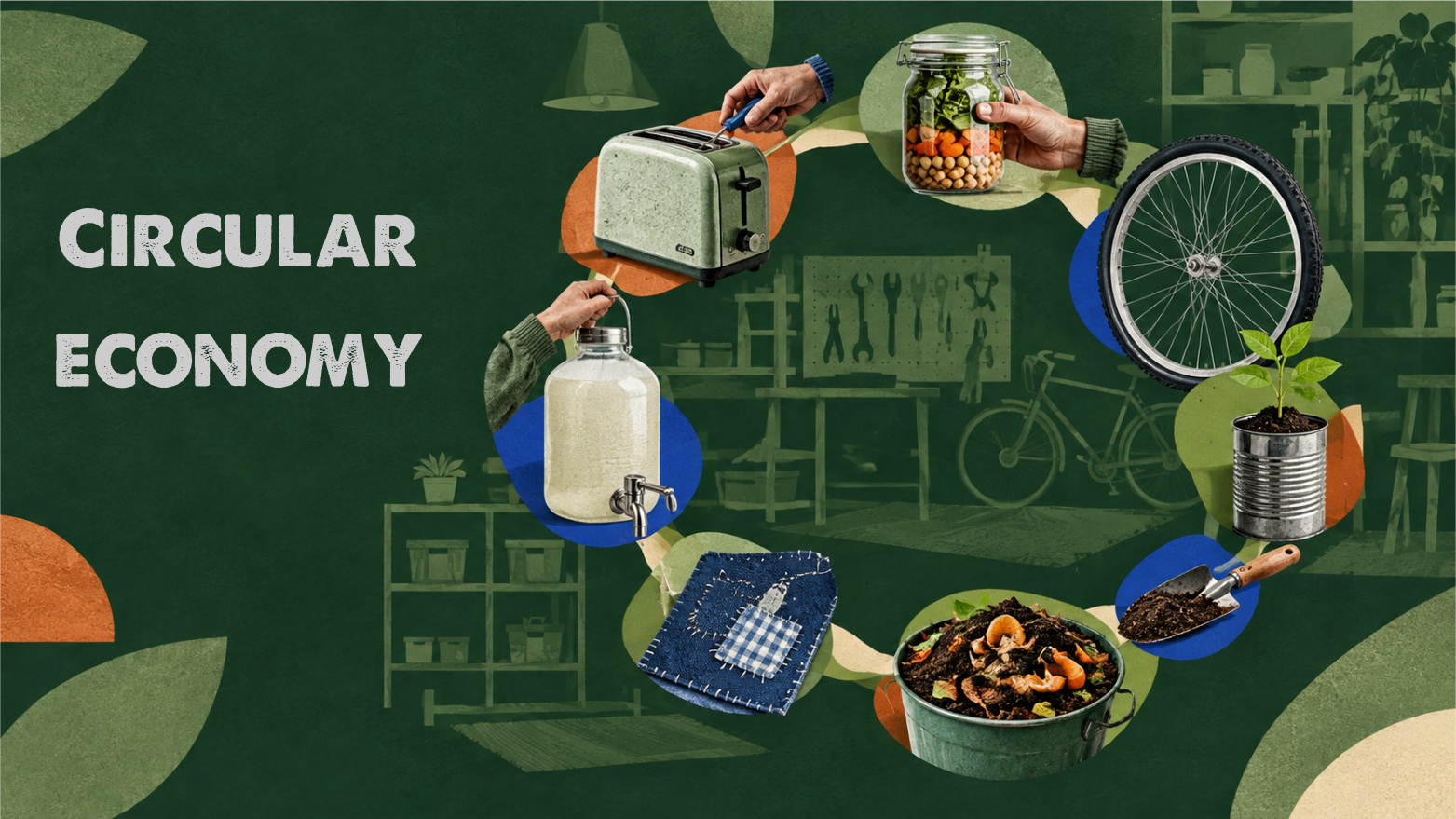
The current economy is designed to take resources, make products, sell them, use them, and throw them away. A circular economy challenges that wasteful pattern by asking a simpler question: how can materials, skills, food, energy, and useful objects stay in circulation for longer?
This project explores practical alternatives to the throwaway model. It follows repair cafés, reuse networks, community workshops, tool libraries, food-rescue projects, refill schemes, recycling cooperatives, local makers, and initiatives that turn waste into something useful again. It pays attention not only to carbon, materials, and landfill, but also to the social value created when people repair, share, teach, and build together.
Circular Economy asks whether sustainability can be more than individual consumer choice. It explores how communities can make lower-waste living more affordable, accessible, and collective — while creating local skills, reducing dependence on extractive supply chains, and proving that care for people and care for the planet belong together.